.png?width=1340&height=1008&name=elysium%20marketing%20(3).png)
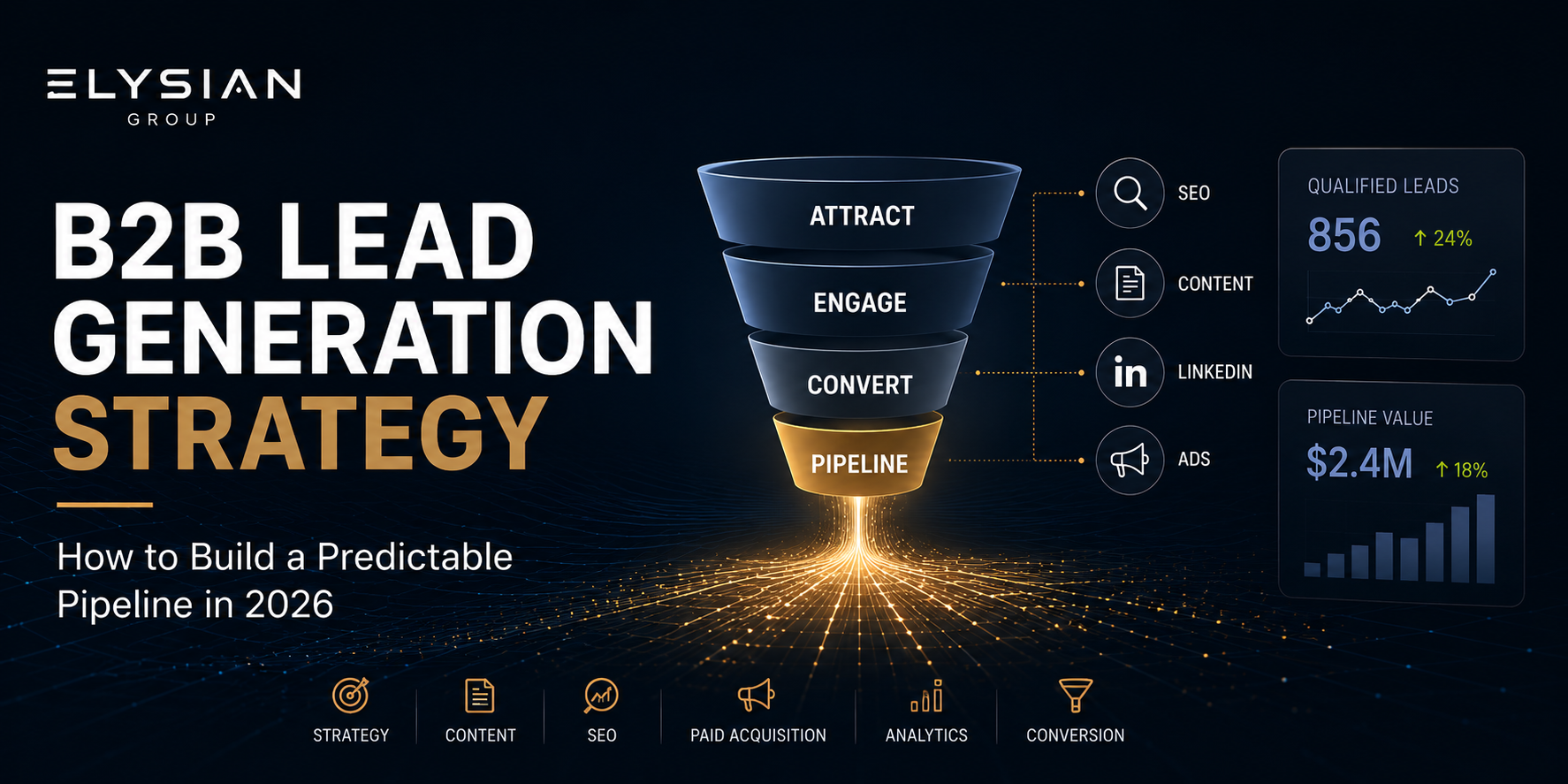
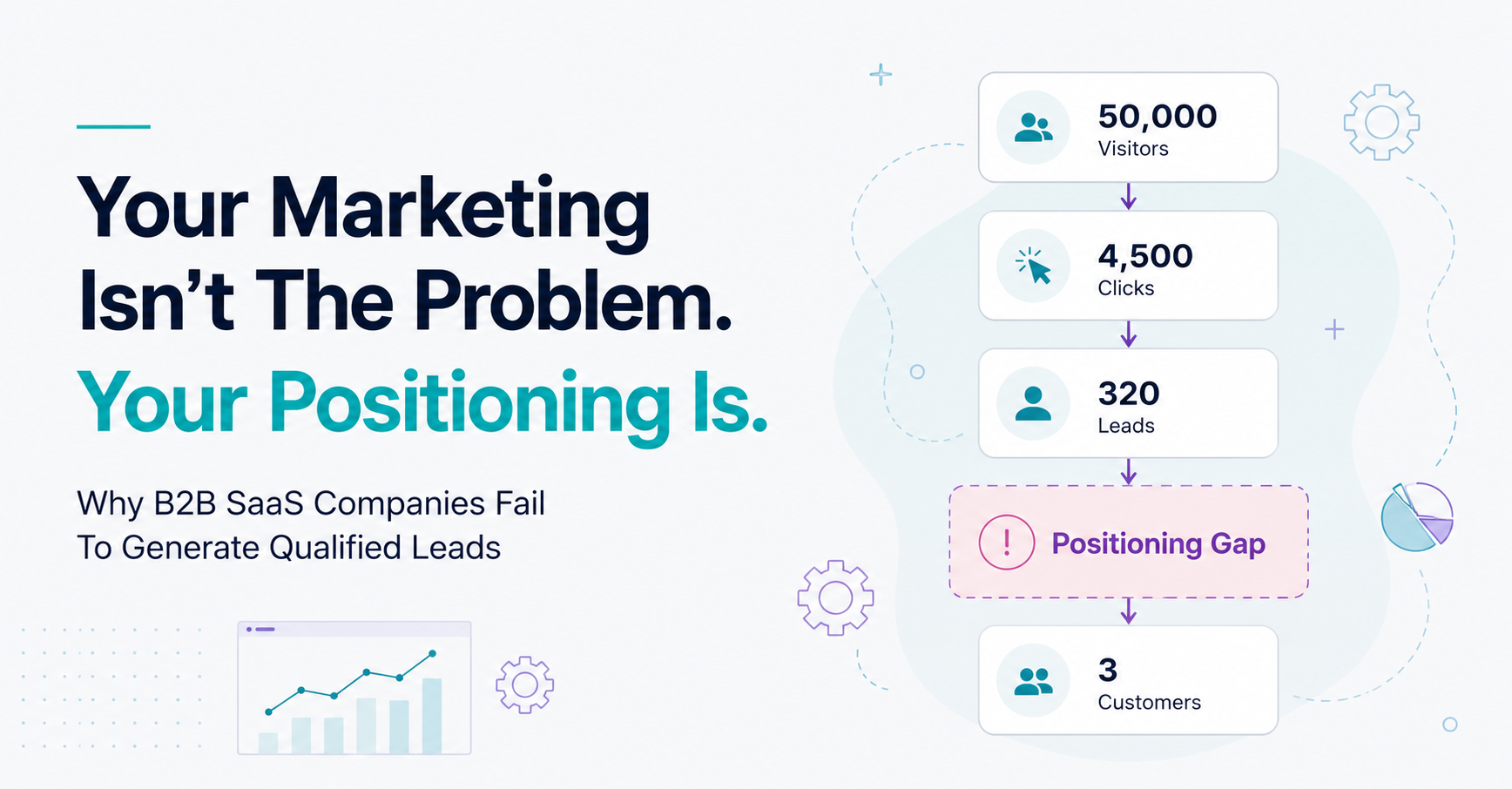

Many B2B companies do not have a lead generation problem. They have a system problem.
They run campaigns, publish content, test paid ads, post on LinkedIn, update landing pages, and still struggle with the same issue: traffic does not turn into qualified pipeline.
The reason is simple. B2B buyers do not convert because they saw one ad or read one article. They convert when your marketing clearly explains the problem you solve, proves your relevance, builds trust across several touchpoints, and gives them a clear next step.
That is why modern B2B lead generation should not be treated as a collection of disconnected tactics. It should work as a full-funnel growth system.
At Elysian Group, we help B2B, SaaS and tech companies build marketing systems that attract the right buyers, convert demand into qualified leads, and support revenue growth through strategy, content, SEO, paid acquisition, messaging and conversion optimization.
What Is B2B Lead Generation?
B2B lead generation is the process of attracting, educating and converting potential business buyers into qualified sales opportunities.
But in practice, successful B2B lead generation is not just about collecting emails or booking calls. It is about creating a predictable path from visibility to trust, from trust to intent, and from intent to sales conversations.
A strong B2B lead generation system usually includes:
- clear ICP definition;
- positioning and messaging;
- SEO and content built around buyer intent;
- landing pages that explain the offer clearly;
- LinkedIn and expert-led distribution;
- paid acquisition for high-intent traffic;
- retargeting and nurturing;
- analytics and funnel reporting.
When these parts work together, marketing stops being random activity and becomes a repeatable growth channel.
Why Most B2B Lead Generation Fails
Most B2B companies do not fail because they lack effort. They fail because their marketing activity is not connected to how their buyers actually make decisions.
Here are the most common problems.
1. The Company Targets Too Broad an Audience
A common mistake is trying to speak to “startups,” “business owners,” “SaaS companies” or “enterprises” as one large group.
That is too broad.
A CEO of an early-stage SaaS company, a Head of Sales in a B2B service company, and a Marketing Director in a tech business may all need growth, but they do not have the same pain, budget, urgency, objections or buying triggers.
Before scaling lead generation, you need to define:
- who the best-fit buyer is;
- what business problem they are trying to solve;
- what triggers them to search for help;
- what makes them delay the decision;
- what proof they need before booking a call.
Without this, content becomes generic, ads become expensive, and landing pages fail to convert.
2. The Messaging Is Too Product-Centered
Many B2B websites explain what the company does, but not why it matters to the buyer.
For example, instead of saying:
“We offer digital marketing services for B2B companies.”
A stronger message would be:
“We help B2B companies turn marketing into a predictable source of qualified pipeline.”
The second version connects the service to a business outcome. It speaks to the buyer’s real problem: not enough qualified opportunities, unclear attribution, weak conversion, or poor marketing-to-sales alignment.
Strong B2B messaging should answer three questions quickly:
- What problem do you solve?
- Who do you solve it for?
- Why should this buyer trust you?
If your website does not answer these questions within a few seconds, potential clients will leave before they understand your value.
3. Content Is Created for Traffic, Not Pipeline
SEO traffic alone does not create revenue.
A blog can bring thousands of visitors and still generate no qualified leads if the content is too broad, too educational, or disconnected from buying intent.
For B2B lead generation, content should support different stages of the buying journey:
Top of funnel
Content that helps buyers understand the problem.
Examples:
- “Why B2B Marketing Is Not Generating Qualified Leads”
- “How to Reduce CAC in B2B SaaS”
- “Common Demand Generation Mistakes in B2B”
Middle of funnel
Content that helps buyers compare approaches.
Examples:
- “SEO vs Paid Ads for B2B Lead Generation”
- “Fractional CMO vs Marketing Agency”
- “How to Build a B2B Content Engine”
Bottom of funnel
Content that helps buyers take action.
Examples:
- “B2B Marketing Audit Checklist”
- “How to Choose a B2B Marketing Partner”
- “B2B Growth Strategy Framework”
The goal is not to publish more. The goal is to publish content that attracts the right buyer and moves them closer to a decision.
4. Paid Campaigns Are Launched Before the Funnel Is Ready
Paid acquisition can work very well for B2B, but only when the offer, targeting, landing page and follow-up process are aligned.
Many companies start with ads too early. They send paid traffic to a weak website, unclear offer or generic contact page. Then they assume the channel does not work.
Before scaling paid acquisition, check:
- Is the ICP clear?
- Does the landing page speak to a specific pain?
- Is the offer strong enough?
- Is there proof, such as cases, testimonials or numbers?
- Is conversion tracking set correctly?
- Is there a retargeting and nurture flow?
Paid ads do not fix weak positioning. They only expose it faster.
5. There Is No Clear Conversion Path
Many B2B websites rely on one generic CTA: “Contact us.”
That is not always enough.
Different buyers need different levels of commitment. Some are ready to book a call. Others want to understand your process, review your expertise, compare options, or evaluate whether the problem is urgent enough.
A stronger conversion path may include:
- Book a Growth Audit;
- Request a Marketing Strategy Call;
- Download a B2B Lead Generation Checklist;
- View Services;
- Read Case Studies;
- Compare Growth Options.
The CTA should match the buyer’s stage of awareness.
For example, Elysian Group already uses service-led CTAs such as “Book a Growth Audit” and “Schedule Strategy Call,” which are better aligned with B2B buyers than a vague contact form.
A Better B2B Lead Generation Framework
Here is a practical framework for building a predictable B2B pipeline.
Step 1: Define the ICP and Buying Triggers
Start with the best-fit customer, not the channel.
Define:
- company size;
- industry;
- business model;
- sales cycle;
- average deal value;
- decision makers;
- internal pain points;
- external buying triggers.
A buying trigger could be:
- the company raised funding;
- sales pipeline slowed down;
- CAC increased;
- the founder wants to scale beyond referrals;
- the team lacks senior marketing leadership;
- the company is entering a new market;
- paid campaigns are not converting;
- marketing and sales are not aligned.
These triggers should guide your content, messaging, ads and sales conversations.
Step 2: Build Positioning Around Business Outcomes
Your positioning should not only describe what you do. It should make the buyer understand why your solution matters now.
Weak positioning:
“We provide SEO, paid ads and content marketing.”
Stronger positioning:
“We help B2B companies build a full-funnel marketing system that attracts qualified buyers, improves conversion and creates predictable pipeline.”
The second version connects services to outcomes.
For B2B, the most powerful outcomes are usually:
- more qualified leads;
- lower CAC;
- better conversion rates;
- stronger sales pipeline;
- clearer attribution;
- shorter sales cycles;
- higher trust with decision makers.
Step 3: Create SEO Content for Commercial Intent
If you want content to generate leads, focus on topics your buyers search when they are close to solving a business problem.
Examples of high-intent B2B keywords:
- B2B marketing strategy agency;
- B2B lead generation services;
- SaaS growth marketing agency;
- Fractional CMO for startups;
- B2B SEO agency;
- LinkedIn marketing for B2B;
- paid acquisition for B2B SaaS;
- B2B content marketing strategy.
Each article should include:
- a clear answer to the search intent;
- examples;
- practical frameworks;
- internal links to services;
- comparison sections;
- FAQs;
- a relevant CTA.
For GEO visibility, the content should also answer questions directly, use clear definitions, include structured sections, and explain concepts in a way that AI search systems can easily extract.
Step 4: Use LinkedIn as a Trust and Distribution Channel
In B2B, LinkedIn is not just a social media platform. It is a trust-building channel.
Your buyers may discover your company through search, but they often validate your expertise through founder content, company posts, case studies, expert opinions and comments.
A strong LinkedIn system should include:
- founder-led insights;
- pain-point posts;
- short case breakdowns;
- carousel explainers;
- opinion-based posts;
- repurposed blog content;
- sales enablement content;
- engagement with relevant ICP accounts.
The goal is not only reach. The goal is repeated visibility in front of the right decision makers.
Step 5: Use Paid Acquisition to Capture and Accelerate Demand
Paid campaigns work best when they support an existing funnel.
For B2B, paid acquisition can be used for:
- Google Search campaigns around high-intent keywords;
- LinkedIn campaigns targeting decision makers;
- retargeting website visitors;
- promoting lead magnets;
- driving demo or audit requests;
- testing messaging and offers.
The best paid campaigns are not built around clicks. They are built around pipeline quality.
Track:
- cost per qualified lead;
- lead-to-call conversion;
- call-to-opportunity conversion;
- pipeline generated;
- CAC;
- revenue influenced.
This is especially important for B2B companies with long sales cycles, where a simple cost-per-lead metric can be misleading.
Step 6: Improve Landing Page Conversion
A B2B landing page should not just look good. It should reduce confusion and increase trust.
A high-converting B2B landing page usually includes:
- clear headline;
- specific ICP;
- pain points;
- business outcomes;
- service breakdown;
- proof;
- process;
- FAQ;
- strong CTA;
- simple form.
The page should make it easy for a buyer to think:
“This company understands my problem.”
If your page is visually polished but vague, it will not convert.
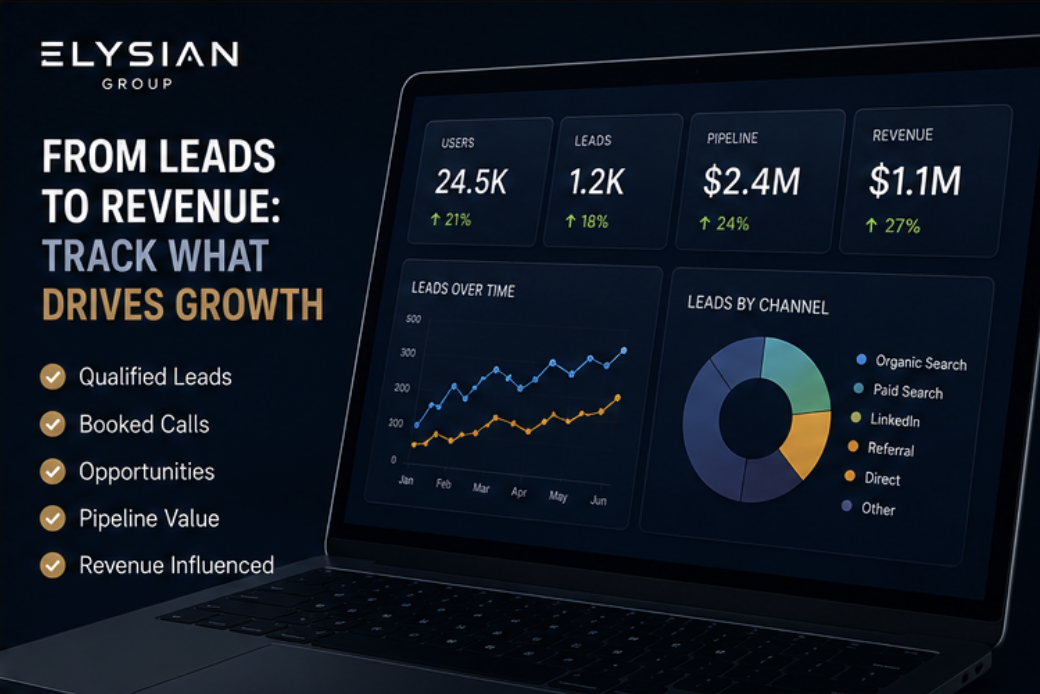
Step 7: Connect Analytics to Revenue
You cannot improve what you cannot see.
A proper B2B marketing system should track the full journey:
- traffic source;
- landing page performance;
- form submissions;
- booked calls;
- lead quality;
- sales qualification;
- opportunities;
- revenue.
This allows you to understand which channels create real business impact, not just activity.
For example, one channel may generate many leads but low sales quality. Another may generate fewer leads but higher-value opportunities. Without attribution and reporting, it is easy to scale the wrong thing.
What a Predictable B2B Lead Generation System Looks Like
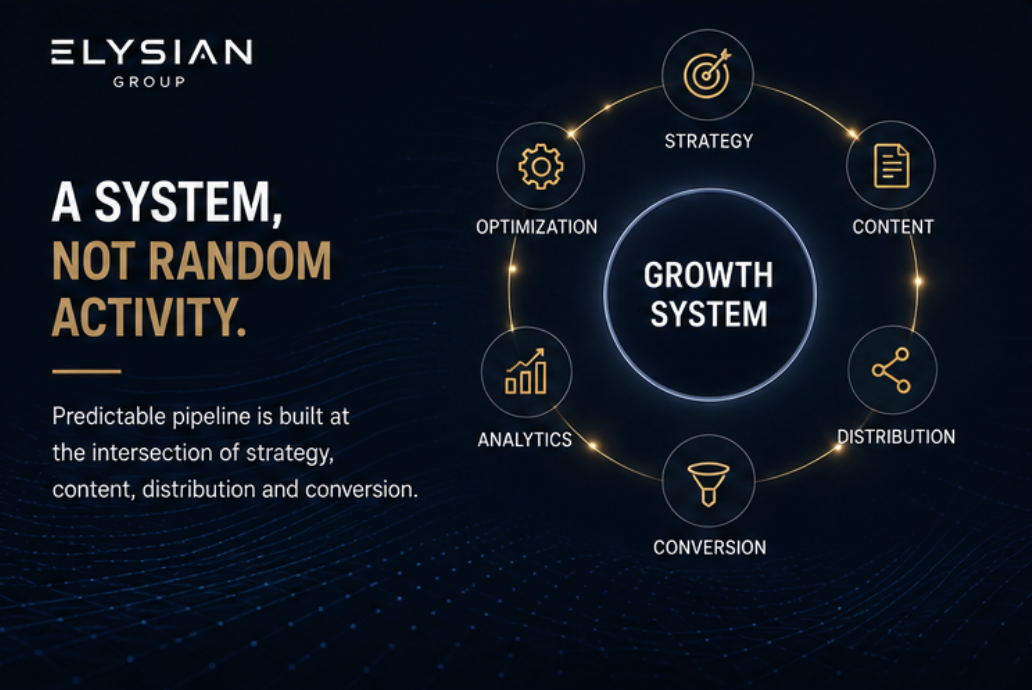
A strong system works like this:
- Your positioning makes the value clear.
- SEO brings in buyers searching for solutions.
- Content educates and builds trust.
- LinkedIn creates repeated visibility.
- Paid acquisition captures and accelerates demand.
- Landing pages convert interest into action.
- Analytics show what drives qualified pipeline.
- Continuous optimization improves performance over time.
This is how marketing becomes a revenue channel instead of a collection of disconnected tasks.
B2B Lead Generation Checklist
Use this checklist to evaluate your current system:
- Is your ICP clearly defined?
- Does your website explain the business outcome you deliver?
- Are your services connected to buyer pain points?
- Do you have content for each funnel stage?
- Are your SEO topics connected to commercial intent?
- Do your landing pages have clear CTAs?
- Are your paid campaigns connected to specific offers?
- Do you use retargeting?
- Do you track lead quality, not only lead volume?
- Do sales and marketing use the same definition of a qualified lead?
- Do you review performance monthly?
- Do you know which channels generate real pipeline?
If the answer is “no” to several of these questions, your lead generation problem is probably not traffic. It is funnel structure.
Final Thoughts
B2B lead generation is not about doing more marketing. It is about building a system where every channel has a clear role.
SEO creates discoverability. Content builds trust. LinkedIn supports authority. Paid acquisition captures demand. Landing pages convert. Analytics show what to scale.
When these parts work together, B2B companies can move from random leads to predictable pipeline.
Want to turn your marketing into a predictable growth channel?
Elysian Group helps B2B, SaaS and tech companies build full-funnel marketing systems across strategy, SEO, content, paid acquisition, positioning, LinkedIn and conversion optimization.
Book a Growth Audit and identify what is blocking your qualified pipeline.