.png?width=1340&height=1008&name=elysium%20marketing%20(3).png)
Why Your B2B SaaS Marketing Isn't Generating Qualified Leads (And How To Fix It)

Julia Shevchenko
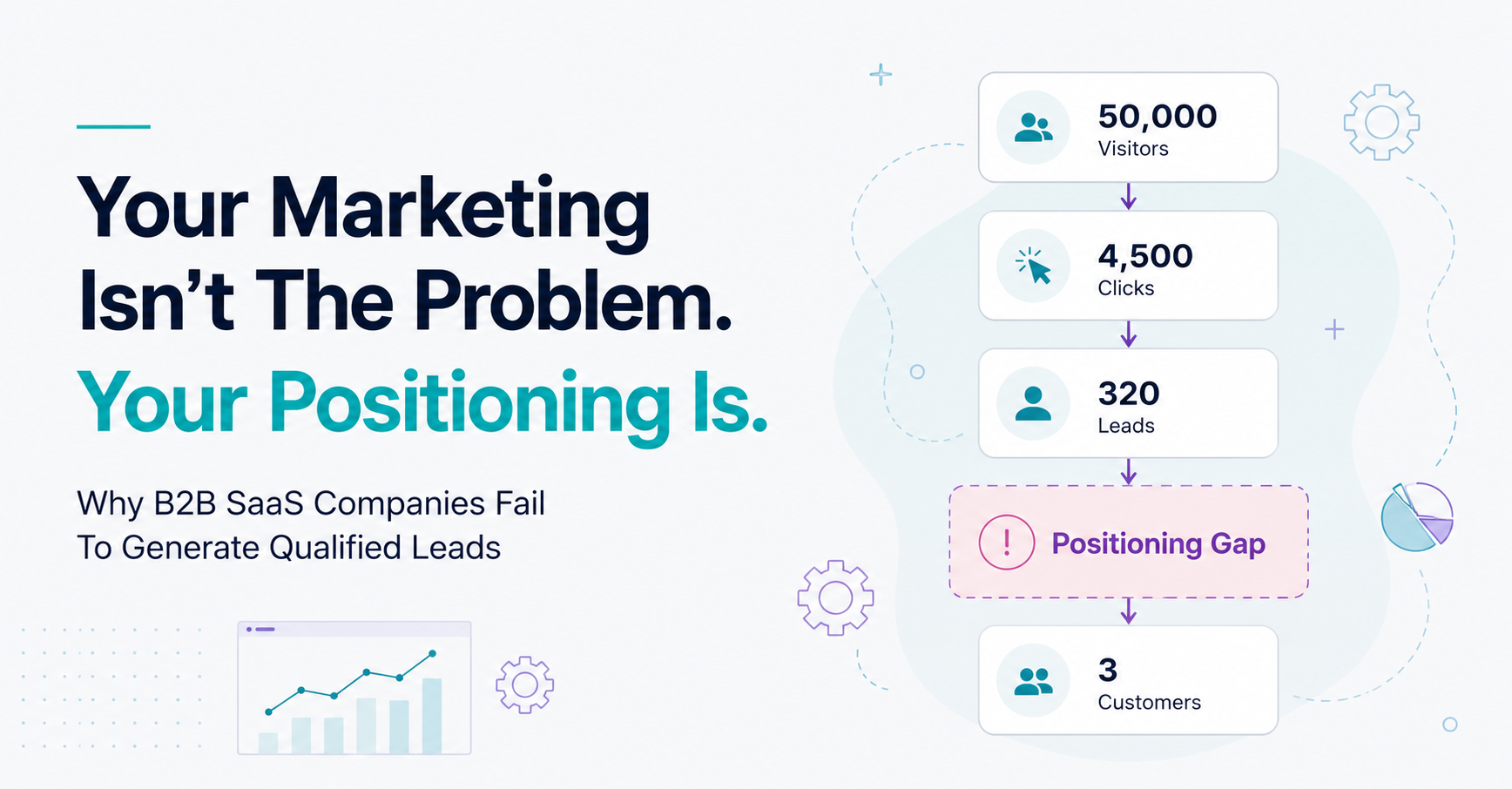
Many B2B SaaS companies believe they have a lead generation problem.
In reality, they often have a positioning problem.
If your website receives traffic, your campaigns generate clicks, and people occasionally book a demo, but sales still struggle to close deals, the issue may not be your marketing channels.
It may be the message itself.
The Hidden Cost of Poor Positioning
Most SaaS companies describe what they do instead of explaining why prospects should care.
Statements such as:
- AI-powered platform
- Innovative solution
- End-to-end software
- Advanced analytics
sound impressive internally but mean very little to buyers.
Your prospects are not searching for features.
They are searching for outcomes.
Instead of asking:
"What does our product do?"
Ask:
"What business problem does our product solve?"
The difference can dramatically impact lead quality.
Traffic Is Not The Same As Demand
One of the most common mistakes we see is companies focusing heavily on traffic growth.
Traffic alone does not create revenue.
A website attracting 1,000 relevant visitors per month will often outperform a website attracting 50,000 irrelevant visitors.
The goal should be attracting decision-makers who are actively experiencing the problem your solution solves.
This requires:
- Clear positioning
- Strong messaging
- Problem-focused content
- Conversion-focused landing pages
Why Qualified Leads Never Reach Sales
In many organizations, marketing and sales operate with different definitions of a qualified lead.
Marketing celebrates form submissions.
Sales evaluates revenue potential.
Without a shared definition of an ideal customer profile (ICP), lead quality inevitably suffers.
Before investing more in advertising or SEO, companies should clearly define:
- Industry
- Company size
- Revenue stage
- Decision maker
- Buying triggers
This alignment alone can significantly improve pipeline quality.
The Content Gap
Many companies publish content that answers questions nobody is asking.
The best-performing content usually addresses:
- Problems buyers are actively trying to solve
- Risks of maintaining the status quo
- Comparisons between available solutions
- Financial impact of poor decisions
For example:
Instead of:
"Product Features Overview"
Create:
"Why Customer Acquisition Costs Increase After Series A"
Instead of:
"Platform Capabilities"
Create:
"How To Reduce SaaS Churn Without Increasing Marketing Spend"
The second approach attracts buyers much closer to a purchasing decision.
What High-Performing B2B Marketing Looks Like
Successful growth strategies are rarely built around a single channel.
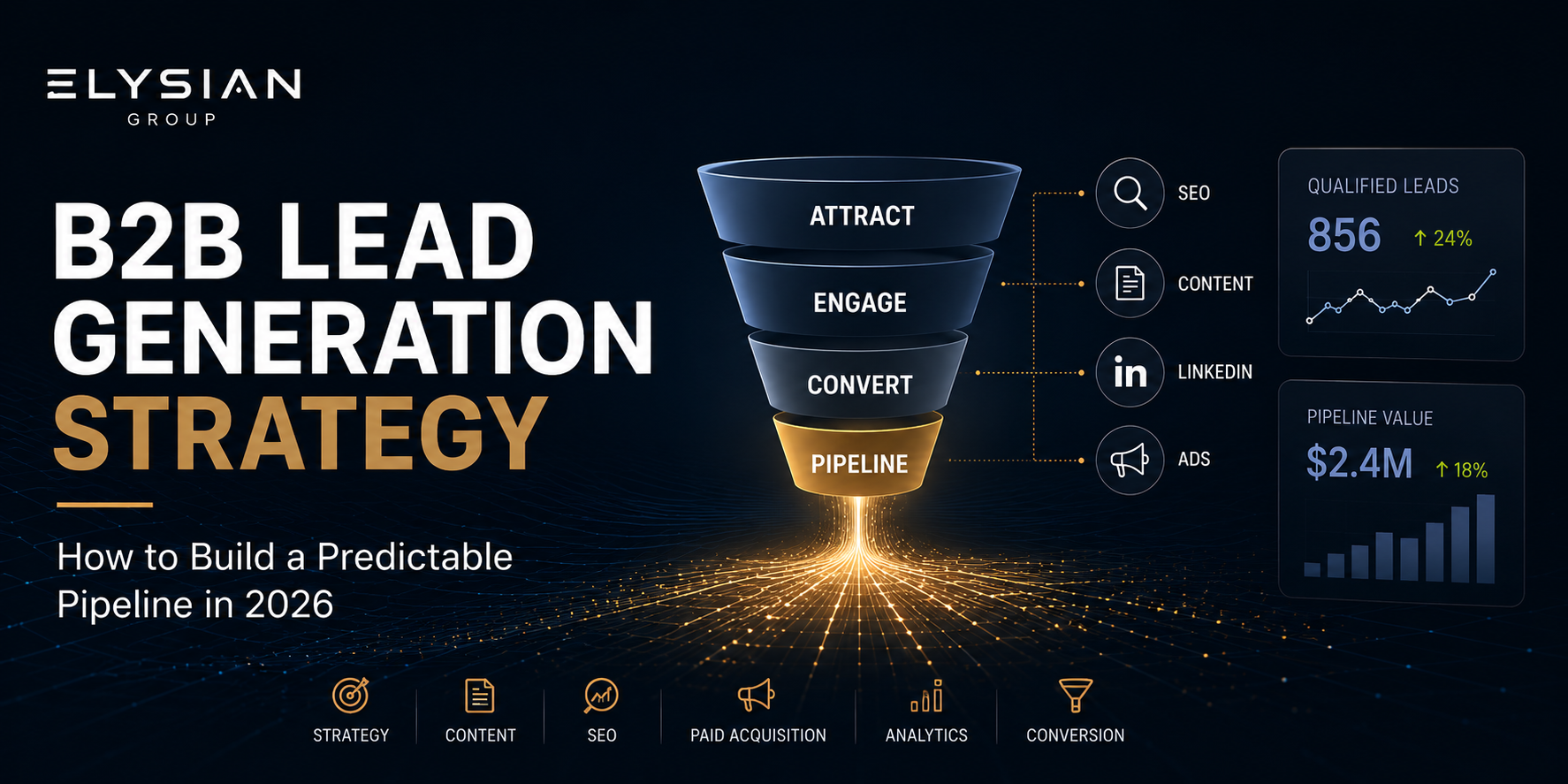
They combine:
- Positioning
- Content strategy
- SEO
- LinkedIn thought leadership
- Demand generation
- Conversion optimization
The result is a predictable system that continuously attracts qualified opportunities rather than random inquiries.
Final Thoughts
If your marketing generates activity but not revenue, the answer is rarely "more traffic."
The answer is usually clearer positioning, stronger messaging, and a strategy built around the problems your ideal customers are already trying to solve.
Companies that focus on these fundamentals consistently generate higher-quality leads, shorten sales cycles, and improve marketing ROI.
Not sure what's limiting your growth?
Get a free B2B Growth Audit and discover the biggest opportunities to improve your positioning, lead generation, and conversion strategy.
👉 Book your Growth Audit today.